



Global Experts Convene for Fourth Annual State of the Science Summit
Experts hailing from multiple continents recently descended on the campus of the University of California, Davis, intent on lowering emissions of enteric methane from livestock throughout the world.
As it pertains to the reduction of methane emissions from ruminant animals, the 2026 State of the Science Summit produced a cadence of groundbreaking research, findings and success stories, not to mention a few blue-sky ideas and the articulation of a prickly challenge or two. Plus, there was a whole lot of collaboration, reunion, discussion and friendship among the more than 300 attendees who traveled in or tuned in for the three-day event.
CLEAR Center Director and newly appointed Chair of the Department of Animal Science at UC Davis Frank Mitloehner welcomed presenters and guests on Day 1, giving a nod to the esprit de corps that has become a hallmark of the annual summit.
“We’ve built more than a conference — we’ve built a community,” he said, underscoring his belief that conversations between sessions can fuel success in laboratories, in legislative chambers and on ranches.
Indeed, according to Joe Proudman, deputy director of the CLEAR Center, “One of the greatest strengths of this summit is that it brings together experts from across research, industry and government to listen and learn from one another. When we make those conversations more accessible, we create opportunities for even more collaboration that can continue well beyond the summit."
Of course, it doesn’t hurt to draw in some of the best minds in the industry. Once again, it was a veritable who’s who in animal ag, with the list of organizations they represented second to none: the United Nations Food and Agriculture Organization, Massachusetts Institute of Technology, Cornell University, the Global Methane Hub, the Global Roundtable for Sustainable Beef and AgriZeroNZ, to name but a few.
“This is a global community trying to solve a global problem at scale,” said Karen Ross, secretary of the California Department of Food and Agriculture, as she shared how important it is to have producers at the proverbial table.
“Bringing agriculture into the conversation is not necessarily where things started,” she said. “Producers thought they were being blamed for a problem.”
The mood has shifted in recent years, in part due to the State of the Science Summit. Methane is no longer seen as a “problem to get rid of,” Ross said.
“It is a problem to dig into and consider how agriculture as an essential food provider is also central to our climate solutions — those opportunities we have to sequester carbon,” she said.
Her work in this arena has not gone unnoticed, including by those responsible each year for honoring someone who’s spent a lifetime working to advance sustainability in animal agriculture.
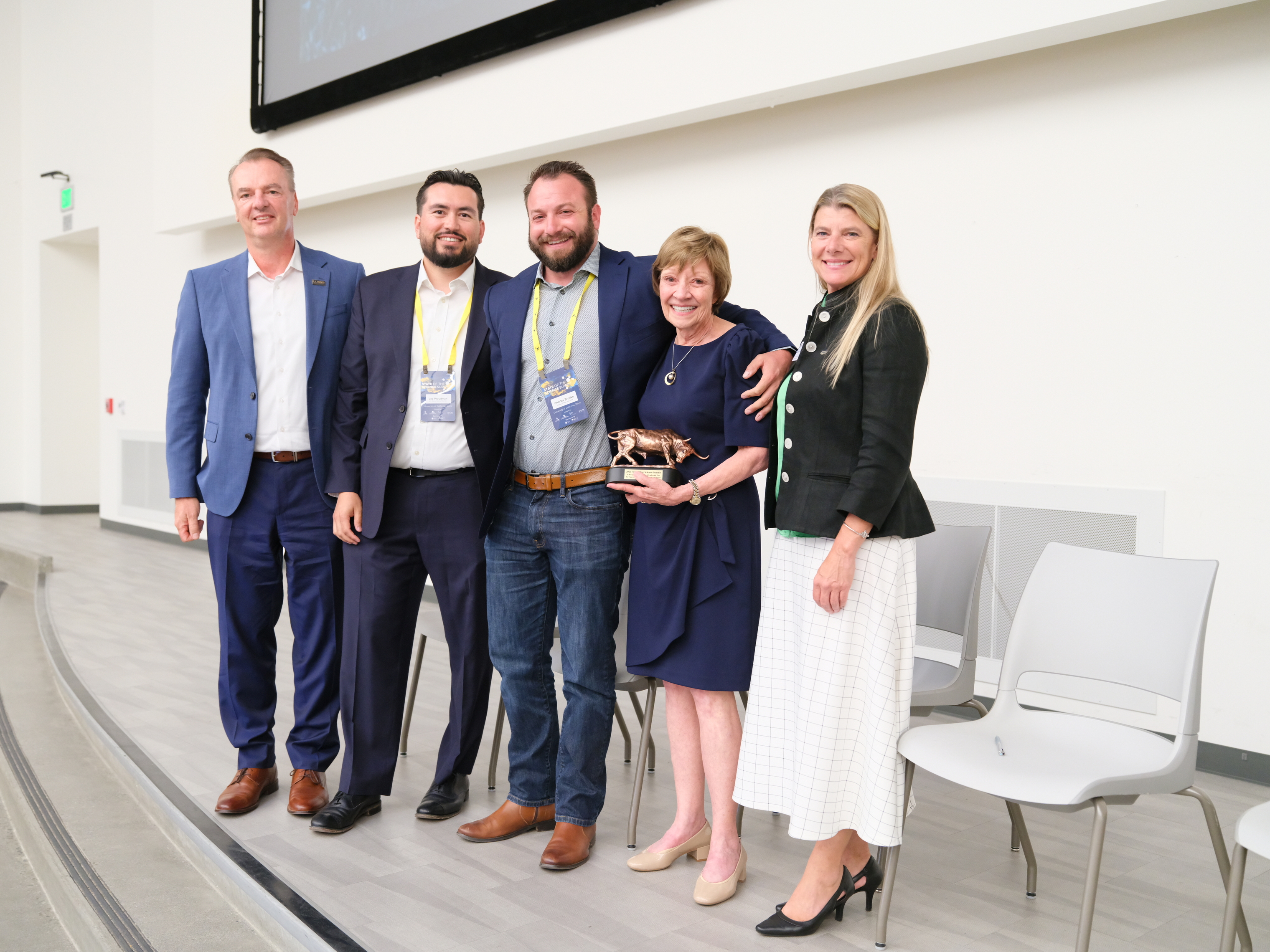
Before the longtime secretary could leave the stage, Mitloehner, Proudman and Charles Brooke, program director for the livestock enteric methane program at Spark Climate Solutions, were waiting in the wings with the second annual award bestowed at the summit. Among her robust list of career achievements and the success she’s had in helping California agriculture move toward the nation’s most ambitious climate goals, Ross is credited with envisioning the State of the Science Summit some five or six years ago.
No longer a pipe dream, this year’s gathering was jam-packed with discussions of feed additives such as bromoform, early-life interventions, measurement strategies and how to advance sustainability in pasture-based systems.
Standing on the shoulders of the previous three summits, it perhaps moved easier and more effortlessly than ever before, not unlike runners who hit their stride. The State of the Science Summit’s continued success can be attributed to the partnership between its organizers: the California Department of Food and Agriculture, Spark Climate Solutions, and the UC Davis College of Agricultural and Environmental Sciences, plus the commitment of everyone else involved. The needle is moving — and quickly.
“The pace of innovation in livestock methane mitigation has never been greater,” according to Brooke.
“The challenge now is making sure the most promising solutions have the research support and investment needed to reach producers at scale. That's exactly why bringing this community together each year is so valuable.”