What is rendering? In simple terms, rendering turns what might be considered waste into valuable products—from biofuels to pet food—playing a quiet but essential role in sustainability.
What if ranchers could move cattle without moving physical fences? Virtual fencing is the answer, as it allows producers to set grazing boundaries using GPS technology, giving them the ability to manage livestock in real time — without posts, wires, or gates.
When Cal Poly Pomona hosted a campus discussion on sustainable dining, the conversation didn’t just stay at the table — it dug into the science behind the food itself. As part of the recent Protein PACT Solutions Summit, the university’s dining services department brought together experts, researchers, students, and food service leaders for an interactive panel exploring the role of animal-sourced foods in climate-smart campus dining.
When it comes to talking about methane and cattle, few people can make the science sound both accessible and hopeful quite like Dr. Sara Place. A former UC Davis graduate student and now an associate professor of animal sciences at Colorado State University, Place has built her career around understanding how livestock can be part of the climate solution — not just part of the problem.
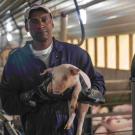
In the small town of Clinton, North Carolina, pig farmer James Lamb is the living embodiment of the old TV sitcom Cheers' theme song, "Where Everybody Knows Your Name." With a population of around 8,300, nearly everyone in the town knows James Lamb—in part because his farming family has been embedded in the community for decades, and in part due to his mindset of working to improve the natural resources he’s been entrusted with for future generations in Clinton and beyond.
To meet farmer and restauranteur Brandon Lee is to meet a man who embodies the spirit of his native Hawaiian Islands, capturing the essence of the tropical paradise, as well as a deep connection to the land he calls home. From the way he cares for his land, to the meals he serves, Lee invites visitors to savor a taste of Hawaii—alive in every ingredient.
Dr. Frank Mitloehner, Director of the UC Davis CLEAR Center, recently joined host Jamie Mackay on New Zealand’s popular radio show “The Country,” a daily program that dives into the nation’s largest industry, agriculture.
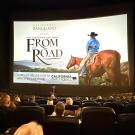
California’s legendary rangelands, once the heart of the American West, are vanishing at an alarming rate. Driven by factors such as economic pressures, regulatory challenges, and relentless urban sprawl, these iconic landscapes are under threat—putting the future of cattle ranching in jeopardy. A powerful new documentary shines a spotlight on the determined ranchers battling to save these crucial rangelands for generations to come.
Farmers and ranchers are often called stewards of the land because of their close connection to it. They hold true to the belief that they can and must enhance natural resources to protect the environment, while simultaneously producing food for a growing population.
For the Mensink family, farming and preserving the natural resources under their care has been a part of their daily life since they began their family farm in Preston, Minnesota in 1981.
Dr. Kristina Horback, an associate professor in the Department of Animal Science at University of California, Davis, has always been fascinated by the lives, and more specifically the minds of cattle. Growing up in the Bay Area, she would travel past ranches, captivated by the sight of cattle grazing on distant hills, and often wondered how these animals navigated the expansive rangelands.
“I was always curious about why the cows were up there on the hill or why they were down the hill,” said Dr. Horback.