From advancing the science to accelerating solutions, the State of the Science Summit: Reducing Methane from Animal Agriculture enters its next chapter June 15–17, 2027. Returning to the University of California, Davis, for its fifth annual gathering, the summit will bring together researchers, producers, policymakers and industry leaders from around the world to explore how science-based strategies can translate into real-world impact.
A viral expression known as “resting pig face” introduced hundreds of thousands of people to the Dadson family and their life in agriculture. Now, through livestock shows, hands-on learning and social media, the family is turning online curiosity into conversations about animal care, agricultural education and where our food comes from.
From the farm to the fridge, reducing food waste conserves resources, saves money and helps to reduce greenhouse gas emissions—that was the message from experts at ReFED on a recent episode of CLEAR Conversations. They also explained why addressing food waste requires solutions across the entire food system and how individuals can make a difference.
Emerging technologies like CRISPR gene editing have the potential to improve animal health, strengthen food production and advance sustainability. But whether those innovations ultimately succeed may depend on something just as important as the science itself: how well scientists communicate with the people they hope to serve.
Reducing methane emissions from livestock will likely require more than a single intervention. Feed additives, manure management, vaccines, improved measurement and other strategies all have a role to play. But genetics offers something that many other approaches do not: the potential for methane reductions to accumulate over generations.
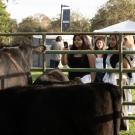
UC Davis’ Salute to Agriculture brought farmers, ranchers, students, researchers and industry leaders together with fans to celebrate California agriculture.
For more than three decades, Lisa Nash Holmes has been a familiar face in the UC Davis Department of Animal Science. She has worked with animals, managed teaching facilities, supported faculty and students, supervised advising staff and helped generations of students gain the hands-on experience that can turn a classroom lesson into a career.
Representing the UC Davis Meat Lab and the Department of Animal Science, undergraduate Animal Science students Emily Boom and Julia Dumont competed in a competition at the convention against students from universities across the country, bringing home awards and recognition for UC Davis.
The roar of the crowd won't be the only thing drawing fans to the UC Davis Health Stadium on Sept. 26. As the Aggies take on Montana in this year's Salute to Agriculture football game, visitors will also have the opportunity to meet the farmers, ranchers, and industry leaders helping shape the future of food and agriculture.