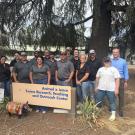
Representing the UC Davis Meat Lab and the Department of Animal Science, undergraduate Animal Science students Emily Boom and Julia Dumont competed in a competition at the convention against students from universities across the country, bringing home awards and recognition for UC Davis.
The roar of the crowd won't be the only thing drawing fans to the UC Davis Health Stadium on Sept. 26. As the Aggies take on Montana in this year's Salute to Agriculture football game, visitors will also have the opportunity to meet the farmers, ranchers, and industry leaders helping shape the future of food and agriculture.
From swine health and emerging research to youth leadership and social media, Jennifer Shike has spent her career telling the stories behind the pork industry. But if you ask the host ofThe Pork Podcastwhat motivates her work, the answer isn't simply journalism—it's helping people better understand agriculture.
Whether they're just beginning to explore careers in agriculture or already helping lead one of the nation's largest pork-producing states, recent visitors to UC Davis came for the same reason: to better understand the science shaping the future of livestock sustainability.
Experts hailing from multiple continents recently descended on the campus of the University of California, Davis, intent on lowering emissions of enteric methane from livestock throughout the world.
For decades, Alison Van Eenennaam has been at the forefront of some of the biggest advances—and biggest debates—in animal agriculture. As a professor in the UC Davis Department of Animal Science and a Cooperative Extension Specialist in Animal Genomics and Biotechnology her career has spanned the rise of genomics, genetic selection and genome editing, helping producers understand emerging technologies while serving as one of agriculture's most recognizable voices in science communication.
In a recent episode of the Hoards Dairyman Podcast, host Jenna Byrne sat down with Dr. Frank Mitloehner, professor and air quality specialist at UC Davis, to discuss the future of dairy sustainability and the evolving conversation around methane emissions.
California’s iconic rangelands support cattle, wildlife, open space, and rural communities, while covering millions of acres across the state. But according to Michael Delbar, CEO of the California Rangeland Trust (CRT), those landscapes—and the families who steward them—face increasing pressure from development, rising costs, and public misunderstanding about agriculture.
The California Rangeland Trust recognized CLEAR Center Director Dr. Frank Mitloehner, with the 2026 Conservation Impact Award during its annual Landowner Appreciation Dinner on June 2nd at the Yolo Land & Cattle Co. in Esparto, California. The event brought together ranchers, conservation partners, and agricultural leaders to celebrate the role of working lands in sustaining California’s landscapes.