Reducing methane emissions from livestock will likely require more than a single intervention. Feed additives, manure management, vaccines, improved measurement and other strategies all have a role to play. But genetics offers something that many other approaches do not: the potential for methane reductions to accumulate over generations.
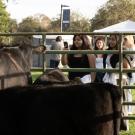
UC Davis’ Salute to Agriculture brought farmers, ranchers, students, researchers and industry leaders together with fans to celebrate California agriculture.
For more than three decades, Lisa Nash Holmes has been a familiar face in the UC Davis Department of Animal Science. She has worked with animals, managed teaching facilities, supported faculty and students, supervised advising staff and helped generations of students gain the hands-on experience that can turn a classroom lesson into a career.
Representing the UC Davis Meat Lab and the Department of Animal Science, undergraduate Animal Science students Emily Boom and Julia Dumont competed in a competition at the convention against students from universities across the country, bringing home awards and recognition for UC Davis.
The roar of the crowd won't be the only thing drawing fans to the UC Davis Health Stadium on Sept. 26. As the Aggies take on Montana in this year's Salute to Agriculture football game, visitors will also have the opportunity to meet the farmers, ranchers, and industry leaders helping shape the future of food and agriculture.
From swine health and emerging research to youth leadership and social media, Jennifer Shike has spent her career telling the stories behind the pork industry. But if you ask the host ofThe Pork Podcastwhat motivates her work, the answer isn't simply journalism—it's helping people better understand agriculture.
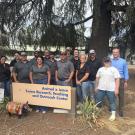
Whether they're just beginning to explore careers in agriculture or already helping lead one of the nation's largest pork-producing states, recent visitors to UC Davis came for the same reason: to better understand the science shaping the future of livestock sustainability.
Experts hailing from multiple continents recently descended on the campus of the University of California, Davis, intent on lowering emissions of enteric methane from livestock throughout the world.