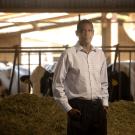
Two stories highlighting innovation and sustainability in pork production have earned recognition from the Council for Advancement and Support of Education (CASE), receiving Best of District VII Awards. One of the stories also earned a prestigious Gold Award in the 2026 CASE Circle of Excellence Awards, an international competition recognizing outstanding achievement in advancement communications.
What does it really take to understand the environmental impact of beef production? On the latest episode of CLEAR Conversations, livestock scientist Dr. Sarah Klopatek joins host Tracy Sellers to discuss greenhouse gas accounting, the bigger picture of beef sustainability and why science needs to translate into practical insights for the people raising livestock.
From advancing the science to accelerating solutions, the State of the Science Summit: Reducing Methane from Animal Agriculture enters its next chapter June 15–17, 2027. Returning to the University of California, Davis, for its fifth annual gathering, the summit will bring together researchers, producers, policymakers and industry leaders from around the world to explore how science-based strategies can translate into real-world impact.
A viral expression known as “resting pig face” introduced hundreds of thousands of people to the Dadson family and their life in agriculture. Now, through livestock shows, hands-on learning and social media, the family is turning online curiosity into conversations about animal care, agricultural education and where our food comes from.
From the farm to the fridge, reducing food waste conserves resources, saves money and helps to reduce greenhouse gas emissions—that was the message from experts at ReFED on a recent episode of CLEAR Conversations. They also explained why addressing food waste requires solutions across the entire food system and how individuals can make a difference.
Emerging technologies like CRISPR gene editing have the potential to improve animal health, strengthen food production and advance sustainability. But whether those innovations ultimately succeed may depend on something just as important as the science itself: how well scientists communicate with the people they hope to serve.
Reducing methane emissions from livestock will likely require more than a single intervention. Feed additives, manure management, vaccines, improved measurement and other strategies all have a role to play. But genetics offers something that many other approaches do not: the potential for methane reductions to accumulate over generations.
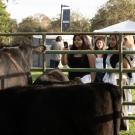
UC Davis’ Salute to Agriculture brought farmers, ranchers, students, researchers and industry leaders together with fans to celebrate California agriculture.