


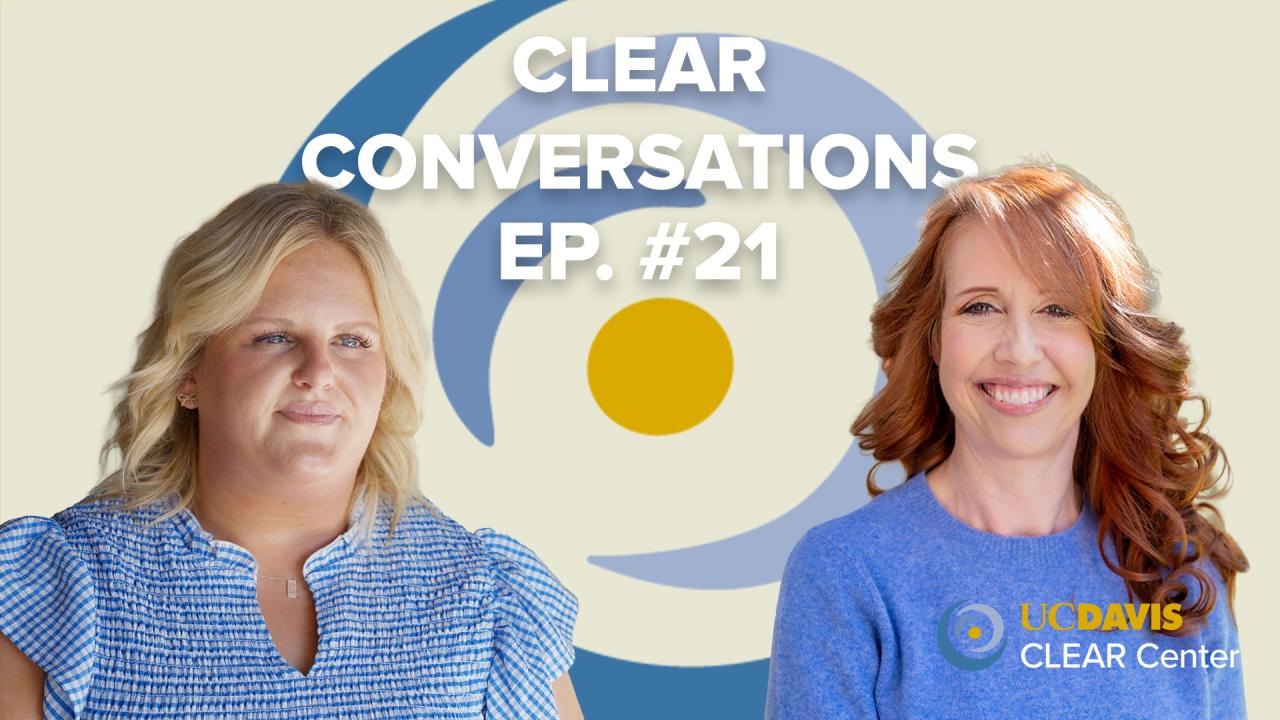
CLEAR Conversations: Teaching the Next Generation of Agricultural Leaders
For Morgan Wonderly, agricultural education starts with getting students out of the classroom and into the barn.
As a full-time lecturer at Cal Poly, Wonderly teaches swine production and livestock evaluation and helps manage the university’s swine unit. The farrow-to-finish operation has about 80 sows, giving students an opportunity to participate in nearly every step of the farm-to-fork process.
“Having pigs right in our backyard … is something that is irreplaceable,” Wonderly said in a recent episode of the CLEAR Conversations podcast, hosted by Tracy Sellers. “Getting them to experience kind of real-life pig farming and paying attention to animals is something that's really invaluable.”
That hands-on experience is especially important because today’s agriculture students come from a wide range of backgrounds. Some grew up on farms or showing livestock. Others arrive from cities such as Los Angeles or San Francisco and have never seen a pig in person.
Wonderly said watching those students gain confidence can be one of the most rewarding parts of teaching. A student who is nervous about holding a piglet on the first day may eventually be ear-notching or helping process piglets. And the lessons extend well beyond animal agriculture.
Responsibility, consistency, communication and leadership are skills students can carry into virtually any career, Wonderly said. Agriculture offers opportunities not only on farms and ranches, but also in fields such as veterinary medicine, engineering, accounting, human resources and other off-farm careers. That broad range of opportunities is one reason Wonderly encourages students who did not grow up in agriculture to get involved.
“Don't let what you don't know kind of keep you from getting involved,” she said. “Get your hands dirty, experience everything.”
For Wonderly, preparing students for the future also means preparing them to communicate about agriculture. Agricultural research and production can generate valuable data and results, but those findings have limited impact if they cannot be explained to the people outside the industry, she said.
“We can do all the research. We can have perfect growth on our pig farm, we can have great numbers, we can have great data, but if I can't communicate that to my audience … I think that's where we sometimes are losing,” Wonderly said.
Social media has become another tool for that communication. Platforms such as Instagram, TikTok and Facebook give producers and agricultural educators an opportunity to show the public what happens on farms and in barns — from animal care and birth to market weight. For Wonderly, being part of that conversation matters.
“If we're not playing in the game where the game's being played, people can talk negatively, or people will only see negative things,” she said.
Ultimately, Wonderly said her favorite part of teaching is watching students discover what they can do — whether that means pursuing veterinary medicine, animal agriculture, engineering or a career they had not considered when they first walked into her classroom. And sometimes, she said, the most rewarding moments come years later, when former students reach out to share where their experiences have taken them.
“I feel like I had a small part in their success,” Wonderly said.