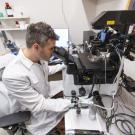
Gene editing is used to make a tiny, controlled change to DNA. By replacing a segment of DNA, scientists have the ability to remove undesirable or problematic genes.
Those in agriculture know to survive, you must adapt and innovate. One way to do this is by embracing technology. Among the most promising—and sometimes most debated—tools is gene editing; a technology that’s transforming the way we grow food and care for animals.
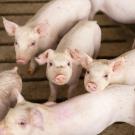
For over three decades, pork producers worldwide have grappled with the relentless threat of PRRS—a virus that not only harms pig health and welfare but also disrupts pork production, strains sustainability, and fuels antibiotic use by weakening pigs’ immune defenses. But with the help of the CRISPR technology, there may be a solution on the horizon.
Technology is helping to transform agriculture and the way food is produced. And while a new era in agriculture is being ushered in, it’s important to understand that technology. For example, though GMO’s and gene editing are often mentioned in the same breath, they are fundamentally different.
Mitloehner lab Ph.D. student Alice Rocha, M.S. explains why GWP* better measures the short-lived nature of methane in the atmosphere and why it is important to measure methane correctly.
Emissions are substances released into the air. When we're talking about greenhouse gas emissions, or GHGs, the main emissions are water vapor (H20), carbon dioxide (CO2), methane (CH4), nitrous oxide (N2O), hydrofluorocarbons (HFCs), perfluorocarbons (PFCs) and sulfur hexafluoride (SF6).
Carbon sequestration is the process of capturing, securing and storing carbon dioxide from the atmosphere. The idea is to stabilize carbon in solid and dissolved forms so that it doesn’t cause the atmosphere to warm. The process shows tremendous promise for reducing the human “carbon footprint.” There are two main types of carbon sequestration: biological and geological.