Mitloehner lab graduate student Conor McCabe. M.S., explains why dairy nitrogen management can have major economic, environmental, and human health implications
The terms “carbon neutral” and “climate neutral” are part of the lexicon of global climate change terms. Though they are sometimes used interchangeably, they have different definitions. Understanding the nuances is important.
Methane is a potent greenhouse gas with a warming potential more than 28 times that of carbon dioxide (CO2). But when it comes to livestock and climate change, there are many other characteristics that set biogenic methane (methane from cattle) apart from CO2. Here are an important four:
It’s often helpful to look at the big picture when it comes to greenhouse gas emissions, as it makes it easier to identify areas we need to focus on, but context is still necessary. Greenhouse gas emissions – as well as production – vary by each country and stating emission numbers without specifying a geographic region can drastically impact our approach to climate change solutions.
Countries around the world have varying greenhouse gas emissions policies to help limit climate change, with some stricter than others. Carbon leakage refers to a situation where a company decides to move their production from a country with stringent policies, to a country that is more lenient, leading to an increase in greenhouse gas emissions.
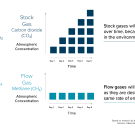
While all greenhouse gases (GHG) have a warming effect on our planet, this warming effect is not equivalent across all GHG. These gases behave differently in the atmosphere and their long-term effects on climate change vary. The major factor contributing to a GHG warming effect is whether it is a stock or flow gas.
California is taking bold steps in the fight against climate change implementing laws and policies, such as the Cap-and-Trade program, designed to drastically cut down on greenhouse gas (GHG) emissions. In the last decade, the Golden State has introduced several new bills, including Assembly Bill 32, Senate Bill 32 and SB 1383, and has been successfully working towards meeting the greenhouse gas mitigation goals outlined in these bills.
Perhaps more helpful than asking if meat is bad for the planet is engaging in a dialogue about the effect meat and dairy production have on the environment and what the downside and significant upside of animal agriculture are all about.
The term “greenhouse gas effect” generally has negative connotations these days, but that hasn’t always been the case. The phenomena whereby certain gaseous compounds trap the sun’s heat and act as a blanket of insulation around Earth is what makes our planet hospitable to life. (See “What is a Greenhouse Gas?”)
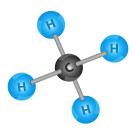
Methane (CH4) is a gas composed of carbon and hydrogen. It’s a highly flammable gas that is colorless and odorless. In fact, when there was a major methane leak in Southern California in 2016, the leak could only be seen using a special camera.