From swine health and emerging research to youth leadership and social media, Jennifer Shike has spent her career telling the stories behind the pork industry. But if you ask the host ofThe Pork Podcastwhat motivates her work, the answer isn't simply journalism—it's helping people better understand agriculture.
Whether they're just beginning to explore careers in agriculture or already helping lead one of the nation's largest pork-producing states, recent visitors to UC Davis came for the same reason: to better understand the science shaping the future of livestock sustainability.
Modern producers face a unique challenge to produce more food for a growing population while reducing their footprint on the environment. But efficiencies in breeding through research and technology have allowed farmers to up their production without increasing resources.
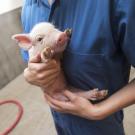
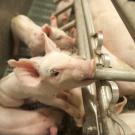
Weaning can be a stressful time for piglets and this stress can lead to sickness, especially with gut infections caused by harmful bacteria like E. coli, leading to diarrhea and slow growth. A recent study explored whether adding two specific amino acids—L-glutamate and L-aspartate—to piglets’ diets could help them grow better and stay healthier.
While the aroma of bacon and baby back ribs filled the air at the Iowa State Fairgrounds at the 2025 World Pork Expo, the hungry crowds weren’t just there to be delighted by the culinary faire on display. They were also hungry to learn, network and collaborate about the third most consumed meat in the United States: pork.
Agriculture is constantly trying to meet the challenges of a growing global population while doing so with sustainable methods. And that’s where scientific research and cutting-edge technology can come into play. Together, they can offer groundbreaking potential and innovative techniques that could possibly pave the way for healthier animals as well as a reduced impact on the environment.
A good start to life is essential and can be the set-up for a healthy and productive future. Dr. Russ Hovey, a professor in the Department of Animal Science, is working on a new grant aimed at using AI to help piglets start their lives strong and healthy, as their early days are crucial to their long-term health and productivity
As farmers and ranchers face challenges such as a changing climate, resource scarcity and the pressure to feed an ever-growing population, they also find themselves intertwined more than ever with the technology industry, as both look to find sustainable and feasible solutions for our food system.