swine

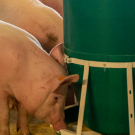
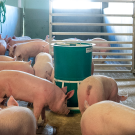
What do pigs eat and why does it matter?

The biggest expense when producing pork is feeding pigs. In fact, feed makes up roughly 70-80% of the variable total costs to produce pork. Since 2020, the cost of feed has been rising steadily, and pork producers feel the financial pinch of lower margins.

UC Davis’ Yanhong Liu Shores up PIG-PARADIGM Study

Yanhong Liu, an associate professor of animal nutrition and a member of the CLEAR Center at University of California, Davis (UC Davis), is bolstering the work of the five-year-long international PIG-PARADIGM study currently underway. In addition to lending her well-regarded expertise in animal nutrition and experience gained from her work to reduce antibiotics use in swine, Liu and other faculty from UC Davis are leading a project team of postdoctoral researchers and Ph.D. candidates in nutrition, microbiology and big data analysis.

Antibiotics and Antimicrobial Resistance in Swine Production

The use of antibiotics in livestock production has reshaped the farm for well over a half-century. While antimicrobial drug use for food-producing animals is below previous highs, efforts to further reduce the need for antibiotics play a key role in fighting antimicrobial resistance. The swine industry is central in the conversation about antibiotics’ importance, impact and sustainability.

African Swine Fever and Lessons Learned in Prevention

African swine fever (ASF) is a highly contagious disease with a morbidity rate of up to 100% that infects domestic and wild swine. ASF has been found in more than 100 counties but has never entered the United States. ASF only infects swine; it is not a human or public health threat.

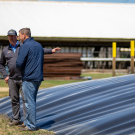
Anaerobic Digesters on Swine Farms

An anaerobic digester is an air-tight enclosure wherein enzymes and microorganisms convert the biodegradable organic matter contained in the manure into biogas and new microbial cells.