For nearly 60 years, New World screwworm was largely a problem of the past for the United States. That changed in 2026. In June, the U.S. Department of Agriculture confirmed New World screwworm in cattle in South Texas, the first confirmed U.S. livestock detection in decades.
With an ever-expanding global population, and continually declining number of farmers producing fresh food, modern agriculture operates with necessary efficiencies often overlooked by critics. A long-standing false representation of agriculture has made consumers skeptical of how their food is produced. The purpose of this article is to explain what concentrated animal feeding operations (CAFOs) are, how they adhere to animal welfare priorities and their essential role in producing adequate food for our population.
Modern producers face a unique challenge to produce more food for a growing population while reducing their footprint on the environment. But efficiencies in breeding through research and technology have allowed farmers to up their production without increasing resources.
What is rendering? In simple terms, rendering turns what might be considered waste into valuable products—from biofuels to pet food—playing a quiet but essential role in sustainability.
What if ranchers could move cattle without moving physical fences? Virtual fencing is the answer, as it allows producers to set grazing boundaries using GPS technology, giving them the ability to manage livestock in real time — without posts, wires, or gates.
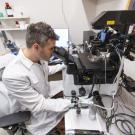
Gene editing is used to make a tiny, controlled change to DNA. By replacing a segment of DNA, scientists have the ability to remove undesirable or problematic genes.
Those in agriculture know to survive, you must adapt and innovate. One way to do this is by embracing technology. Among the most promising—and sometimes most debated—tools is gene editing; a technology that’s transforming the way we grow food and care for animals.
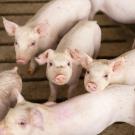
For over three decades, pork producers worldwide have grappled with the relentless threat of PRRS—a virus that not only harms pig health and welfare but also disrupts pork production, strains sustainability, and fuels antibiotic use by weakening pigs’ immune defenses. But with the help of the CRISPR technology, there may be a solution on the horizon.
Technology is helping to transform agriculture and the way food is produced. And while a new era in agriculture is being ushered in, it’s important to understand that technology. For example, though GMO’s and gene editing are often mentioned in the same breath, they are fundamentally different.
As the climate crisis intensifies, reducing global greenhouse gas emissions has become an urgent priority that requires immediate and sustained action.Methane, one of the greenhouse gases, is particularly of concern with its strong ability to trap heat in the atmosphere.
Agricultural producers face many pressures and challenges. With a growing population that will demand more food, and a strained climate that requires attention and adjustment of practices, it is difficult to know right from wrong and fact from fiction.
Consumers have constantly evolving preferences and expectations when shopping for meat. Recent legislation, such as Proposition 12, demonstrates just how dedicated consumers are to understanding how their meat was raised and ensuring it aligns with their values.
As a society, we have a strong understanding of how to prevent the spread of germs. We wash our hands, clean our spaces, seal our food and stay home if we are sick. Pork producers implement similar practices on their farms to keep their herds healthy.
Technological advancements continue to shift the pork industry. While not new to producers, data is integral to furthering sustainable pork farming. Producers are experienced in recording data on various aspects of their operations — feed use, litter size, rate of gain and the list goes on — to ensure they run efficient and cost-effective operations.