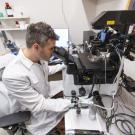
Gene editing is used to make a tiny, controlled change to DNA. By replacing a segment of DNA, scientists have the ability to remove undesirable or problematic genes.
Those in agriculture know to survive, you must adapt and innovate. One way to do this is by embracing technology. Among the most promising—and sometimes most debated—tools is gene editing; a technology that’s transforming the way we grow food and care for animals.
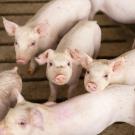
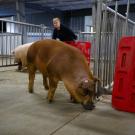
For over three decades, pork producers worldwide have grappled with the relentless threat of PRRS—a virus that not only harms pig health and welfare but also disrupts pork production, strains sustainability, and fuels antibiotic use by weakening pigs’ immune defenses. But with the help of the CRISPR technology, there may be a solution on the horizon.
Technology is helping to transform agriculture and the way food is produced. And while a new era in agriculture is being ushered in, it’s important to understand that technology. For example, though GMO’s and gene editing are often mentioned in the same breath, they are fundamentally different.
Mitloehner lab Ph.D. student Alice Rocha, M.S. explains why GWP* better measures the short-lived nature of methane in the atmosphere and why it is important to measure methane correctly.
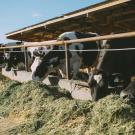
Mitloehner lab Ph.D. student Conor McCabe, M.S. explains what constitutes a dairy cow diet and the many ways they upcycle byproducts into high-quality nutrition.
The terms “carbon neutral” and “climate neutral” are part of the lexicon of global climate change terms. Though they are sometimes used interchangeably, they have different definitions. Understanding the nuances is important.
Countries around the world have varying greenhouse gas emissions policies to help limit climate change, with some stricter than others. Carbon leakage refers to a situation where a company decides to move their production from a country with stringent policies, to a country that is more lenient, leading to an increase in greenhouse gas emissions.
It sounds counterintuitive, but new research is pointing to the fact that instead of merely heating up our atmosphere with the potent gas methane, cows might actually be able to help fight climate change. It all has to do with what happens to methane after it enters the atmosphere, and with the advances American farmers and ranchers have made in the past 70 years.