Science

Can Cattle Help Mitigate Climate Change?

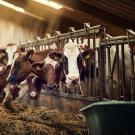
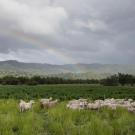
It sounds counterintuitive, but new research is pointing to the fact that instead of merely heating up our atmosphere with the potent gas methane, cows might actually be able to help fight climate change. It all has to do with what happens to methane after it enters the atmosphere, and with the advances American farmers and ranchers have made in the past 70 years.

What are Greenhouse Gas Emissions?

Emissions are substances released into the air. When we're talking about greenhouse gas emissions, or GHGs, the main emissions are water vapor (H20), carbon dioxide (CO2), methane (CH4), nitrous oxide (N2O), hydrofluorocarbons (HFCs), perfluorocarbons (PFCs) and sulfur hexafluoride (SF6).

What is Carbon Sequestration and How Does it Work?

Carbon sequestration is the process of capturing, securing and storing carbon dioxide from the atmosphere. The idea is to stabilize carbon in solid and dissolved forms so that it doesn’t cause the atmosphere to warm. The process shows tremendous promise for reducing the human “carbon footprint.” There are two main types of carbon sequestration: biological and geological.